How to Choose the Right Materials for Outdoor Hardscaping in Minnesota Weather
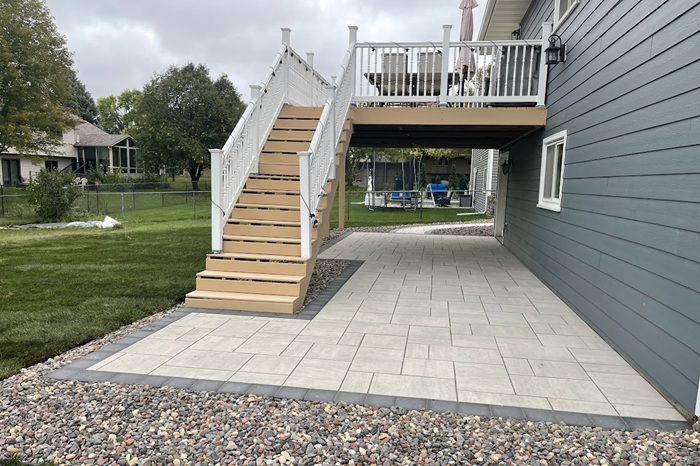
Minnesota homeowners face a unique challenge when designing outdoor spaces. Patios, walkways, and retaining walls must endure dramatic seasonal swings—from hot summer sun to freezing winters with repeated freeze-thaw cycles. Choosing the right materials for outdoor hardscape features plays a major role in how well these structures perform over time. Durable materials, proper installation techniques, and thoughtful design choices all help outdoor spaces remain safe, attractive, and functional throughout the year.
Homeowners planning patios, walkways, or retaining walls often compare materials such as concrete pavers, poured concrete, natural stone, and modular retaining wall systems. Each option performs differently when exposed to Minnesota weather conditions. Rock Solid Services regularly works with hardscape installations where material selection directly affects long-term durability and maintenance requirements. In the sections below, we explore key questions about outdoor materials, including how pavers compare to poured concrete, how freeze-thaw cycles impact retaining walls, which sealants protect hardscape surfaces, how material choices influence maintenance, and which materials offer the best traction in wet or icy conditions.
Understanding these factors helps homeowners design outdoor living spaces that stand up to the Midwest climate. Whether planning patios, walkways, or other hardscaping features, selecting materials suited to regional weather conditions can greatly extend the lifespan and safety of the installation.
Pavers vs Poured Concrete for Patios and Walkways: Structural Differences, Benefits, and Limitations
Patios and walkways are among the most common outdoor hardscape elements in residential landscapes. Two frequently compared materials are interlocking concrete pavers and poured concrete slabs. Both options provide stable surfaces for outdoor living areas, but they differ significantly in how they handle soil movement, seasonal expansion, and long-term repairs. In climates like Minnesota, where ground movement occurs due to freezing and thawing soil, these differences become especially important.
Concrete pavers consist of individual units installed over a compacted gravel base with a sand bedding layer. Because the pavers are separate pieces, the surface has built-in flexibility that allows minor movement without structural failure. If ground movement occurs during winter freeze-thaw cycles, pavers can shift slightly while maintaining overall integrity. Damaged units can be replaced individually without removing the entire surface. This modular structure is one reason pavers are widely used for residential patios and walkways.
Poured concrete slabs are installed as a continuous surface that hardens into a single rigid structure. While concrete is strong in compression, it has limited flexibility. Temperature changes and soil movement can cause cracking over time. Control joints are typically added during installation to guide cracking along predetermined lines, but cracks can still develop in unpredictable ways. For homeowners exploring options for outdoor surfaces and hardscaping, understanding how each material responds to environmental stress helps determine the best choice for patios and walkways.
Maintenance considerations also differ between the two materials. Pavers may require occasional joint sand replacement and weed management, while poured concrete may need crack repair or resurfacing treatments. Appearance is another factor. Pavers come in a wide variety of colors, textures, and patterns that allow complex design layouts. Poured concrete surfaces can be stamped or stained for decorative effects, though they typically offer fewer pattern variations compared to modular paver systems.
How Freeze-Thaw Cycles Affect Retaining Wall Blocks and Natural Stone Structures
Minnesota winters bring repeated freeze-thaw cycles that place significant stress on outdoor structures. When water enters small pores or gaps in masonry materials and freezes, it expands by approximately nine percent in volume. This expansion creates internal pressure that can cause cracking, surface spalling, or displacement of materials over time. Retaining walls and stone structures must be designed specifically to accommodate these environmental forces.
Modular retaining wall blocks are engineered to perform in cold climates. Most systems use interlocking concrete units combined with drainage gravel and geogrid reinforcement behind the wall. Proper drainage is essential because it prevents water accumulation behind the wall, which would otherwise freeze and create pressure. Well-designed retaining walls allow water to pass through drainage layers rather than becoming trapped within the structure.
Natural stone walls respond differently depending on the type of stone used. Dense stones such as granite generally have low water absorption and perform well under freeze-thaw conditions. More porous stones can absorb water and may be more susceptible to weathering over time. Regardless of material type, wall stability largely depends on proper base preparation, drainage management, and installation methods that account for seasonal ground movement.
Freeze-thaw damage often occurs not from the surface material itself but from poor drainage or inadequate base construction. Water trapped behind walls expands when frozen and increases lateral pressure against the structure. Effective retaining wall design therefore prioritizes drainage aggregate, perforated drain pipes, and proper grading to direct water away from the wall.
Sealants and Protective Treatments That Help Extend the Life of Outdoor Hardscape Materials
Outdoor hardscape surfaces are constantly exposed to moisture, ultraviolet radiation, temperature changes, and deicing chemicals. Sealants and protective treatments are commonly used to reduce water penetration and surface deterioration. These products work by forming either a penetrating barrier within the material or a protective film on the surface.
Penetrating sealers are widely used on concrete pavers, natural stone, and poured concrete. These sealers absorb into the pores of the material and chemically bond within the surface layer. Because they do not create a thick coating, they maintain the natural appearance and texture of the material. Penetrating sealers are particularly effective at reducing water absorption and preventing freeze-thaw damage caused by trapped moisture.
Film-forming sealants create a thin protective layer on the surface of the material. These products can enhance color and provide additional protection from staining or chemical exposure. However, film coatings may require periodic reapplication because surface wear from foot traffic and weather gradually degrades the protective layer. Proper surface preparation before application is critical to ensure strong adhesion and consistent coverage.
Sealers also help protect against damage caused by deicing salts. Salt can penetrate porous materials and accelerate deterioration by increasing water retention and promoting chemical reactions within the concrete matrix. Applying appropriate sealers reduces the amount of moisture and salt that can enter the surface, helping preserve both structural integrity and appearance.
How Hardscape Material Choices Influence Long-Term Maintenance and Durability
Material selection directly affects how much maintenance outdoor hardscape features require over time. Factors such as porosity, surface hardness, installation method, and exposure to environmental stress all influence the durability of patios, walkways, and retaining walls. In climates with significant seasonal changes, durability often depends on how well materials handle moisture and temperature fluctuations.
Concrete pavers generally offer strong long-term durability because the modular installation allows for localized repairs. Individual units can be lifted and replaced if damaged or if underground utilities require access. Joint sand between pavers may occasionally need replenishment due to erosion or pressure washing, but the surface structure remains largely intact.
Poured concrete surfaces require different maintenance practices. Cracks may develop due to settlement, thermal expansion, or freeze-thaw cycles. Repair methods can include crack filling, resurfacing, or patching. While these repairs can restore functionality, they may not perfectly match the original surface color or texture.
Natural stone installations can provide excellent longevity when installed with proper drainage and structural support. Dense stones resist weathering and maintain appearance over long periods. Maintenance often involves occasional cleaning and inspection of joints or mortar connections. Selecting materials suited to the environmental conditions helps extend the lifespan of outdoor surfaces.
Outdoor Hardscape Materials That Provide Better Slip Resistance in Wet or Icy Conditions
Surface traction is a major safety consideration for patios, walkways, and poolside areas. Materials used outdoors must maintain adequate grip even when exposed to rain, snow, or ice. Slip resistance depends largely on surface texture and material composition. Rougher textures generally provide better traction than smooth finishes.
Concrete pavers often perform well in wet conditions because many designs incorporate textured surfaces that improve grip. The small joints between pavers also create subtle breaks in the surface that can increase traction compared to large continuous slabs. Natural stone options such as thermal-finished granite or cleft stone also provide good slip resistance due to their naturally rough textures.
In contrast, polished stone or very smooth concrete surfaces may become slippery when wet or icy. Decorative finishes such as stamped concrete can vary widely in traction depending on the pattern and sealant used. Some sealers increase surface gloss, which may reduce slip resistance if applied incorrectly.
Material selection should consider how the space will be used throughout the year. Walkways, steps, and entry areas benefit from textured surfaces that maintain grip during winter conditions. Many homeowners researching durable outdoor materials through resources such as Rock Solid Services also evaluate surface traction to help reduce slip hazards during wet or freezing weather.
Design Outdoor Spaces Built for Minnesota Weather
Outdoor patios, walkways, retaining walls, and landscape features must be designed to withstand Minnesota’s demanding climate. Choosing appropriate materials helps reduce long-term maintenance, improves durability, and supports safe outdoor living spaces. Factors such as freeze-thaw resistance, drainage design, traction, and protective treatments all contribute to the long-term performance of hardscape installations.
Rock Solid Services provides landscaping and outdoor living solutions designed for local conditions. Their team works with homeowners to plan patios, retaining walls, landscape lighting, and complete outdoor environments using materials suited to Minnesota weather patterns. Careful site preparation, proper base construction, and thoughtful material selection all play a role in creating outdoor spaces that remain attractive and functional for years.
If you are planning a new patio, walkway, retaining wall, or landscape improvement, experienced professionals can help guide the design and installation process. Contact us to learn more about outdoor landscaping services.
Rock Solid Services
2308 135th Lane NW
Andover, MN 55304
Phone: 763-398-0739